
Lake Titicaca is not always the top item on one’s agenda when planning a trip to Peru. It wasn’t exactly the first destination on our list either; in fact, it was second on our back-up plan! When we had to cancel our Inca Trail trek due to a lingering injury, we scrambled to fill our two weeks in Peru with something other than the obligatory (but rewarding) visit to Machu Picchu.
After reading about the floating islands of the Uros people and the cultural significance of Puno, Peru’s folklore capital, we decided that a visit to Lake Titicaca would allow us a glimpse into Peru’s history, culture, and geography that we would not find elsewhere in our travels. It was simply too intriguing to pass up. We scheduled a four day, three night stay.
This famous lake derives its name from the Quechua terms Titi, meaning puma, and Kaka, meaning stone. Most visitors to Lake Titicaca (on the Peruvian side) start their exploration in the commercialized port city of Puno.
At over 12,300 feet, Puno poses some challenge to those who are not acclimated to the high altitude. Visitors starting their journey here should allow a few days to adjust before moving to higher altitude. The city’s geographic location lends it to very hot days and cold nights. It’s also not uncommon for rain or hail to come on suddenly. In fact, we saw some of the most beautiful storms we have ever seen during our three days at Lake Titicaca.
To truly take advantage of all that Lake Titicaca has to offer, you should plan to spend at least three days there.
Here are five ways you, too, can experience this often overlooked gem of Peru:
1.) Take a boat ride on the lake.
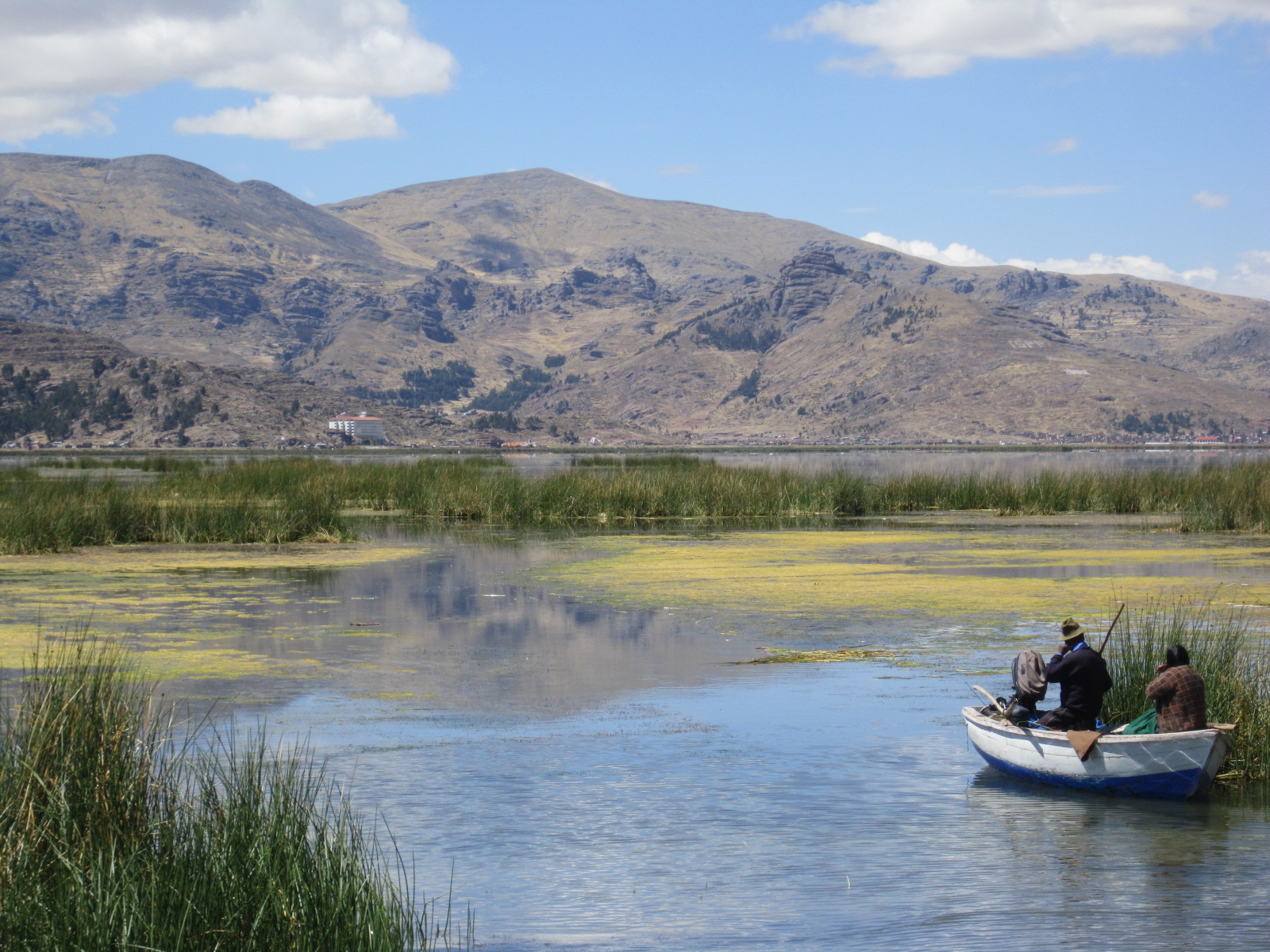
It’s impossible to just go to Lake Titicaca; you have to go out on Lake Titicaca. Going out onto the lake gives you a much better appreciation for how vast it truly is. Furthermore, the lake changes the further out you go. Closer to the shore, the lake is murky and green; out in the open water, it is crisp and clear, a blue as vibrant as the Mediterranean. You’ll be tempted to jump right in! Cruise the pristine waters while absorbing the dry, mountainous landscape along the shore as you breeze past local fisherman seeking their daily catch.
You can book a half-day tour of the lake at any of the tourist companies lining Lima Street in the city’s center. Or, for those who are a bit more adventurous, or who just have more time, you can connect with a company offering kayaking opportunities on the lake. It is recommended to book at least several weeks in advance for such tours.
2.) Stay overnight on one of the islands.
An overnight home-stay will significantly enhance your experience on Lake Titicaca, helping you to understand just how rural life on the lake is. At least three of the larger inhabited islands offer the opportunity for home-stays. We opted for Isla Taquile, about a three hour boat ride from the port of Puno.
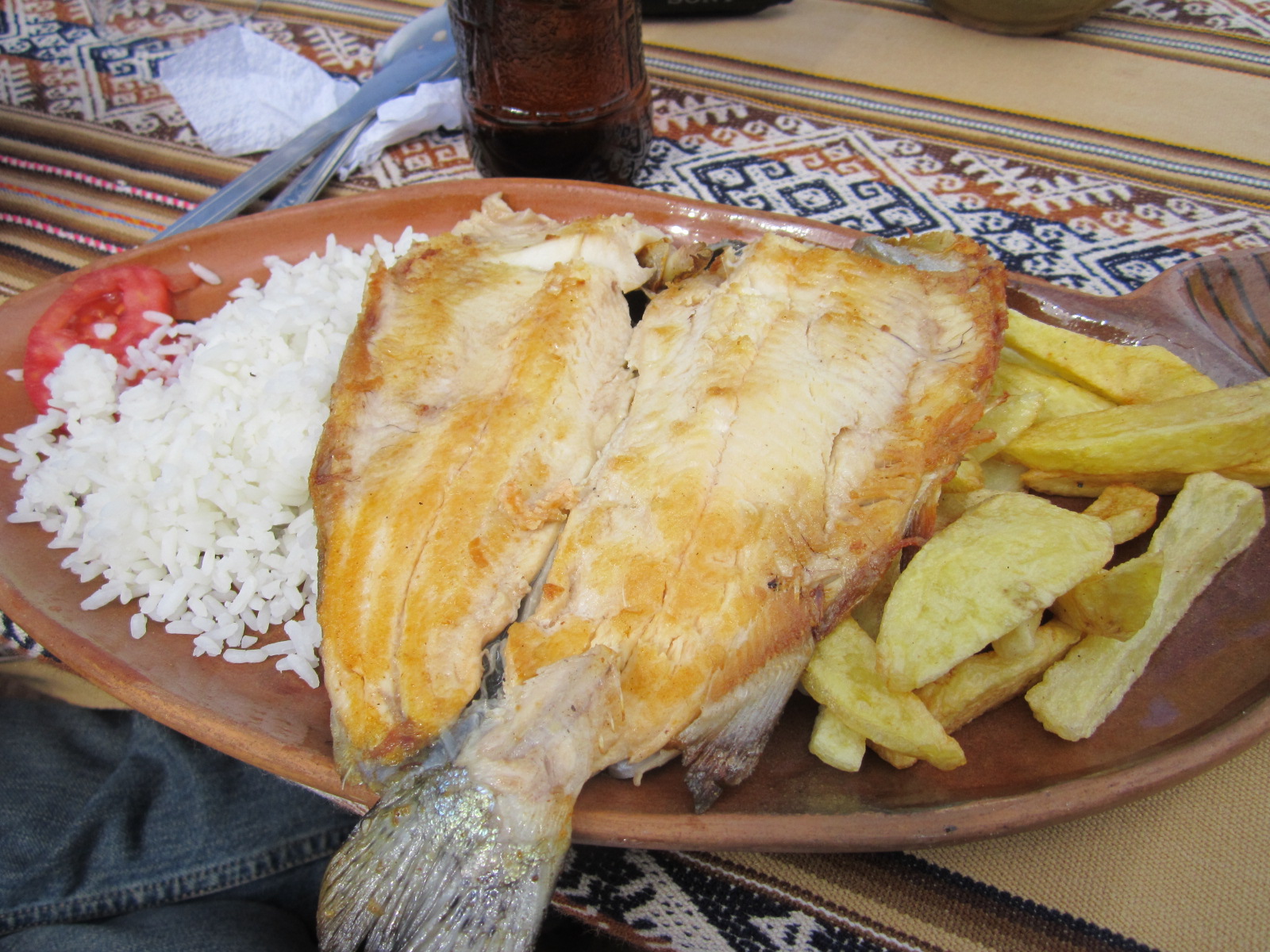
The home-stay allows you to eat delicious (and all-natural!) meals prepared by your host family, stay with them in their homes, and explore the island in greater depth than if you simply took a quick day tour. Depending on what day you stay, you may even get to help with family chores or attend community meetings or events.
Our host family lived in a compound-like home with several separate rooms and buildings, with a bathroom around back. Bleating sheep grazed in the surrounding yard, while cows roamed nearby. We slept in a nice (but firm) bed with several wool blankets. The building was made of mud-brick, with a dirt floor and corrigated tin roof. Although hotel accommodations are certainly more convenient, we were never uncomfortable during our stay.
This is the type of opportunity that I find difficult to pass up when traveling. This is the type of travel experience that broadens your perspective and shapes your worldview. It’s definitely an opportunity you don’t want to miss. Just don’t forget to bring your own roll of toilet paper — just in case!
3.) Visit the floating islands of the Uros people.
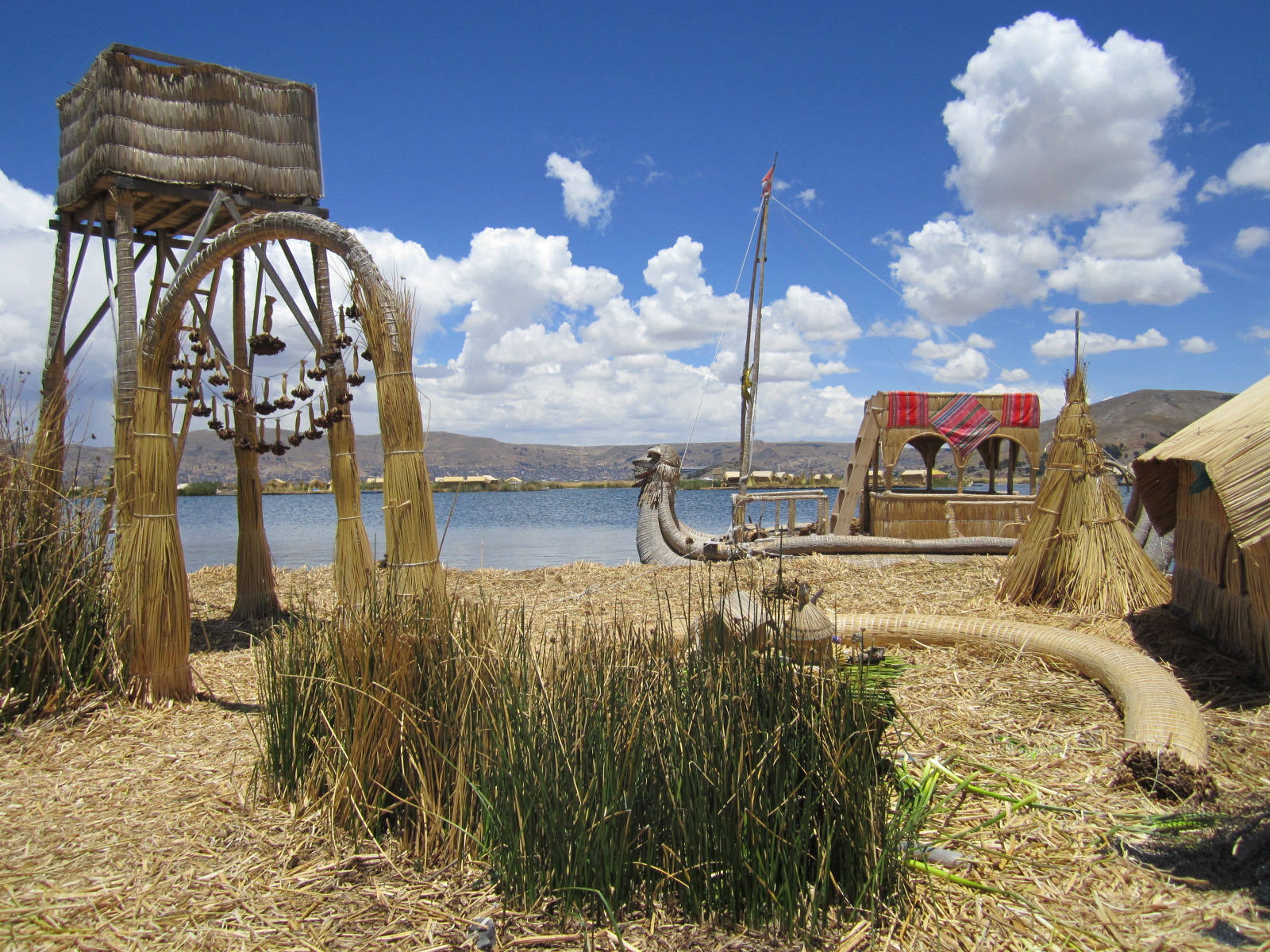 The Uros Islands were one of the main reasons we chose to visit Lake Titicaca. This cluster of 60 islands is about a forty minute boat ride from the main port at Puno.
Stop by and visit with the local families whose ancestors have inhabited the islands for decades. Learn how they cook, work, share food, educate their children, and maintain the physical condition of their islands by replacing rotting reeds. Take a ride in one of the ubiquitous puma-head reed boats, steered by a local guide. These amazing structures take eight men a full day to make — and they only last for two weeks!
The history of the Uros people is fascinating, but their future is uncertain. The temptations and opportunities presented by a more modern, convenient life on the mainland are becoming increasingly more difficult for young people to resist. Plan a visit to these islands while they still exist in their traditional manner.
4.) Shop at the weekend market in Puno.
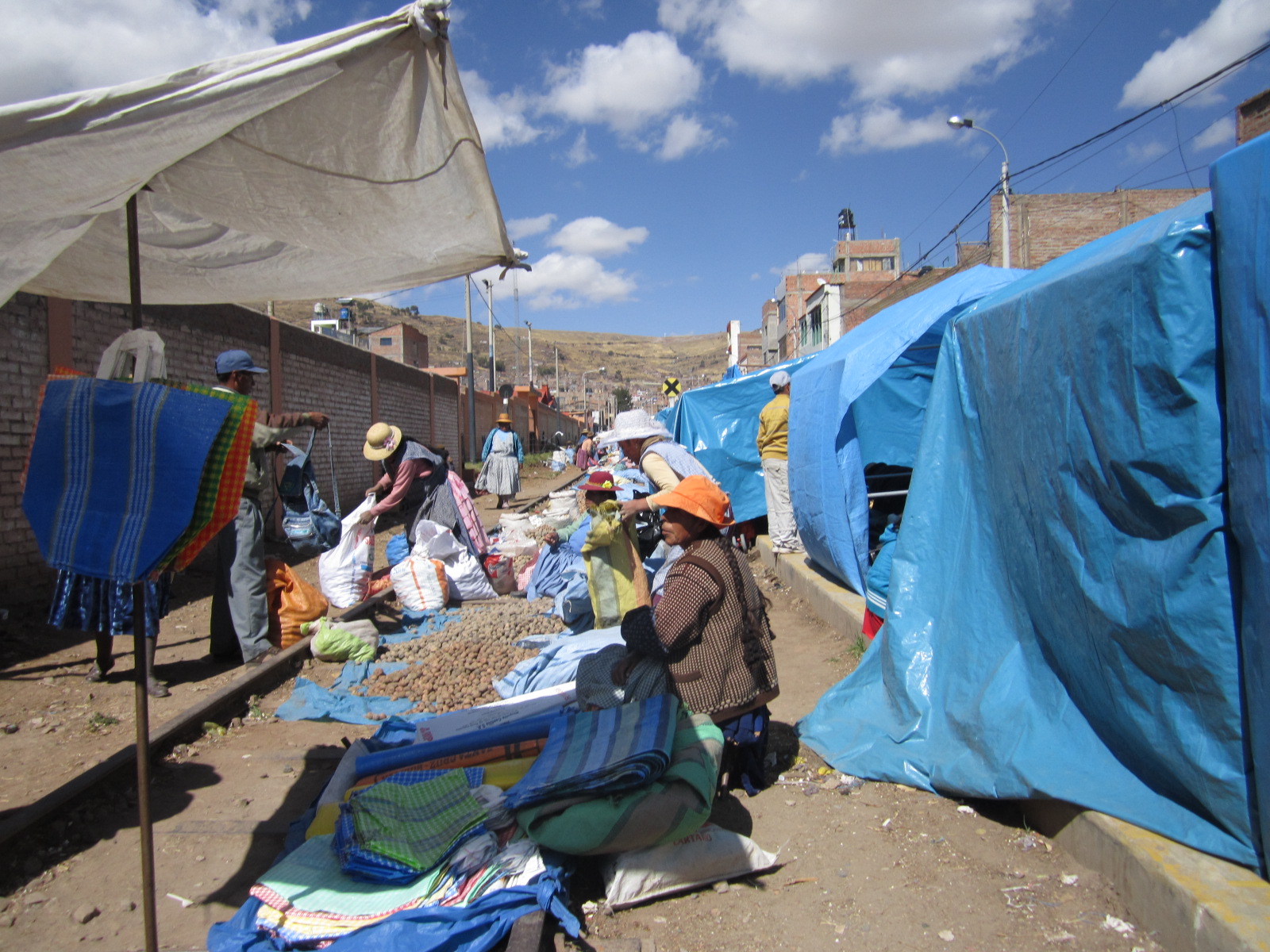
Every Saturday, local residents hold a public market just a quarter mile from Lake Titicaca’s shore in the center of town. Here they sell fruits, vegetables, bread, and grains. You can even take your pick from dozens of Peru’s more than 3,000 varieties of potato! The market runs through several of the town’s main streets and along its old train tracks.
The public market is a great way to immerse yourself in local culture and commerce.
There are also several other attractions in Puno worth a look. Lima Street is in the town center and provides a great place for tourists to shop and eat. It’s particularly lively at night. If you’d like to eat a someplace that caters less to the tourists, just turn down any of the side streets running perpendicular to Lima.
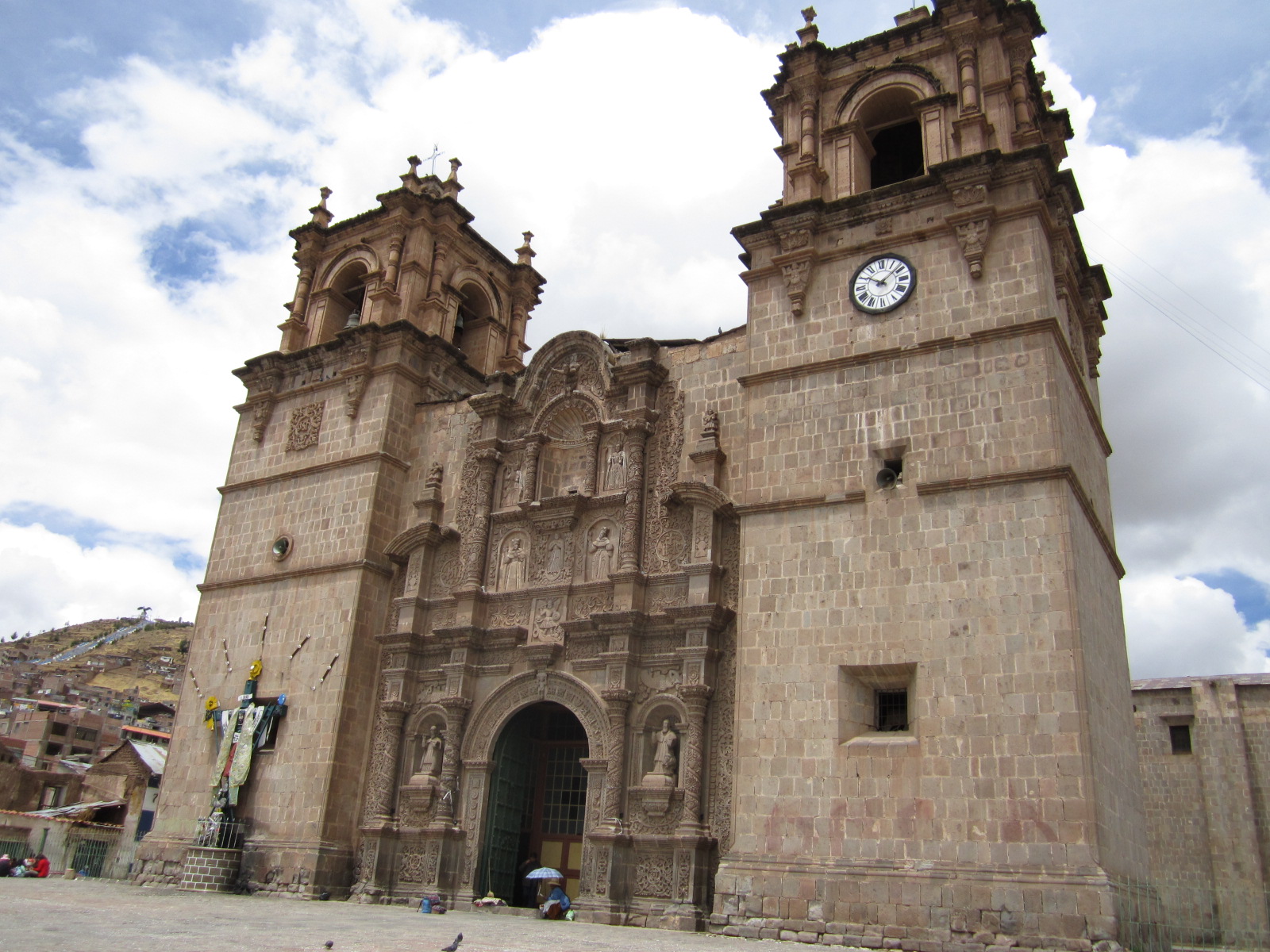
Puno’s La Catedral
La Catedral, the city’s main cathedral, is also worth a stop. It sits along the Plaza de Armas, or main square, and is open to the public and free of change. Just be aware that masses are conducted throughout the day. You’re welcome to stay, just be courteous to those who are there to worship.
5.) Enjoy a folk festival.
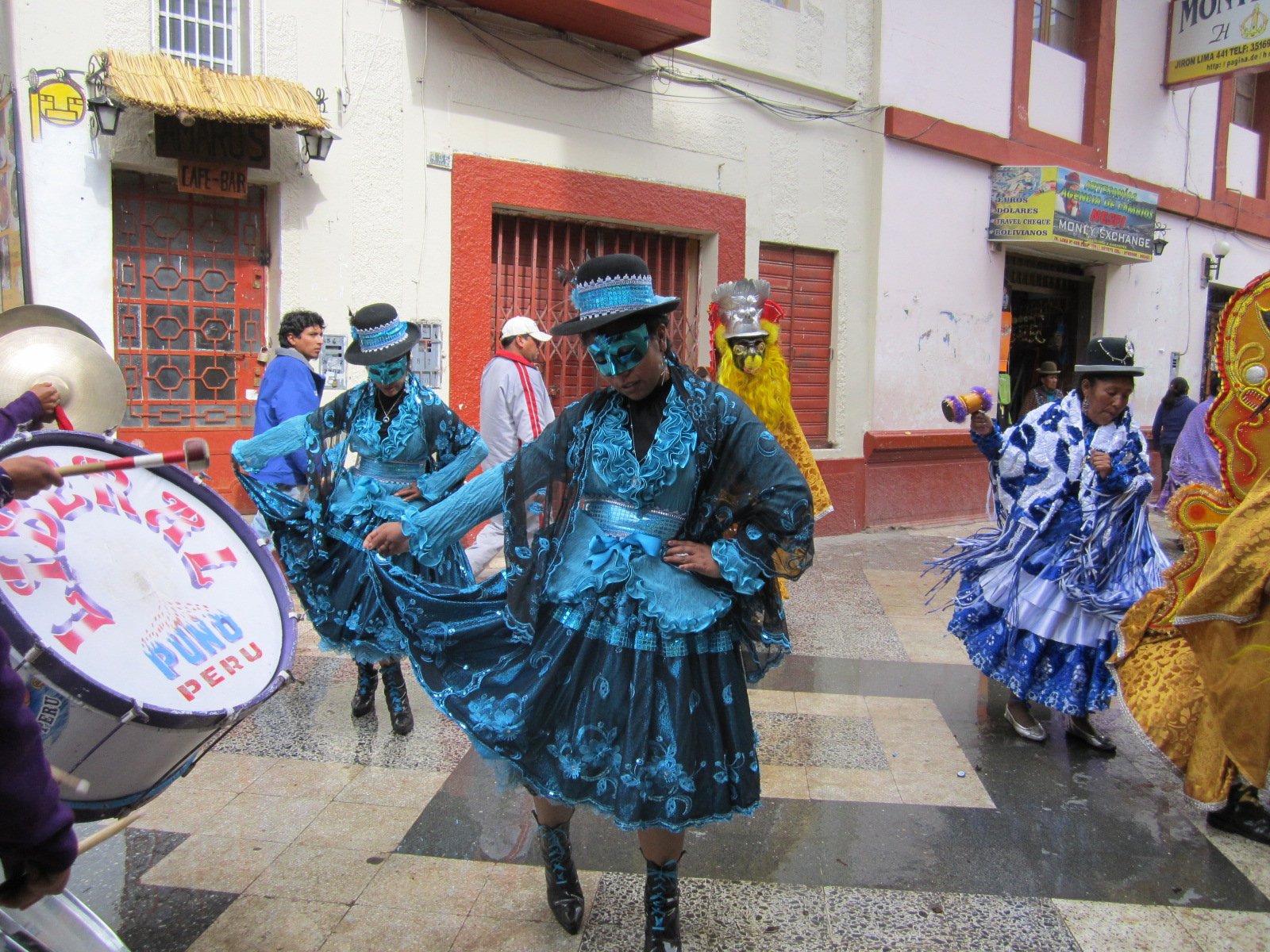
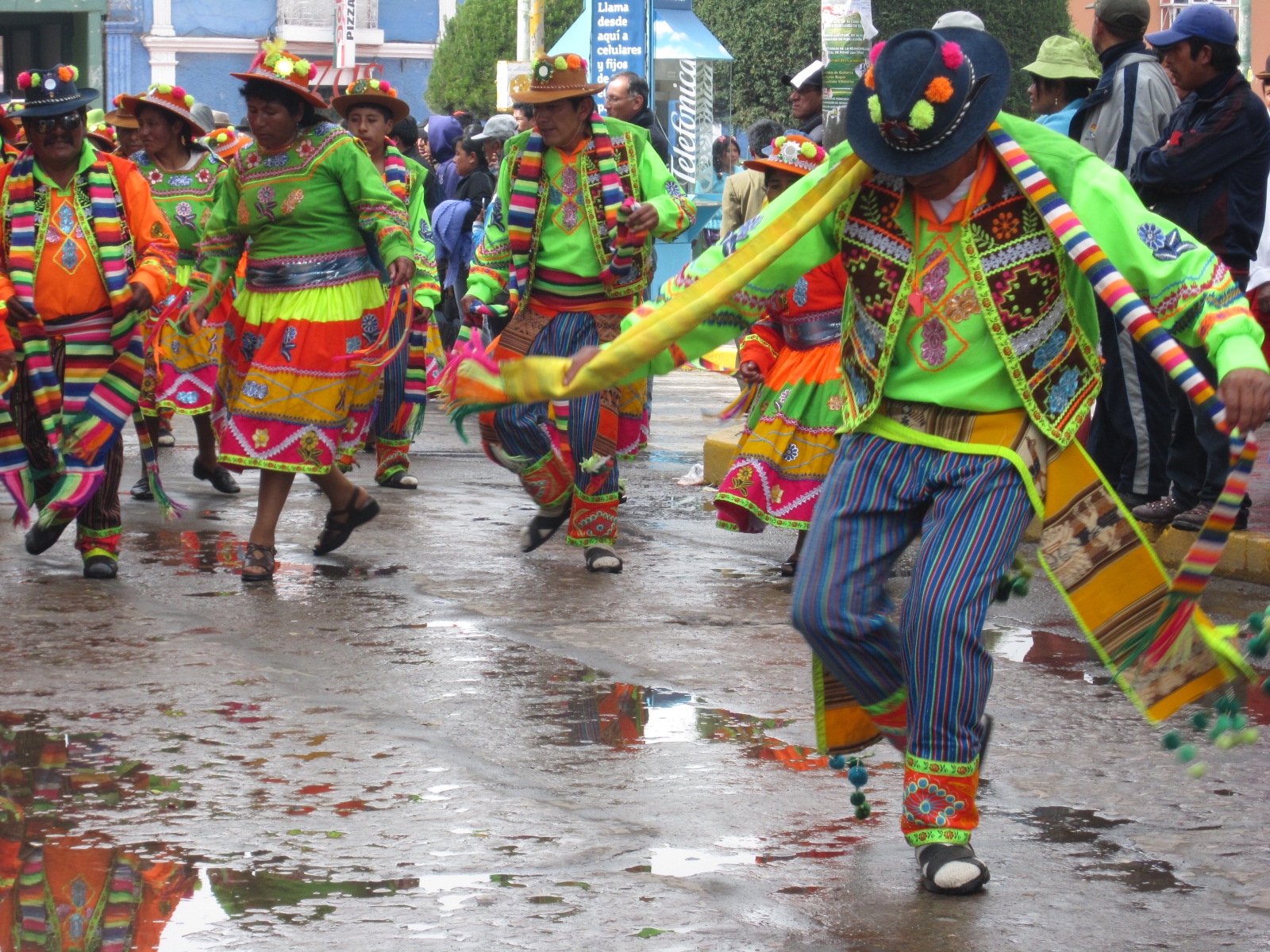
Puno is known as the folklore capital of Peru. You can catch festivals and parades boasting music and dancing in the streets throughout the year. Monthly celebrations are common, and on Sundays military parades are held on the Plaza de Armas. These frequent and colorful celebrations stand in stark contrast to the city’s dry, stark landscape and primarily brown buildings.
One of the best times to experience Puno’s rich folk history is during the Puno Week celebration the first week of November, when the city celebrates its founding. Puno Day is celebrated November 5th, but the celebration starts several days in advance, with parades starting around 2 pm and lasting until nearly midnight. Live brass bands follow troops of masked, energetic dancers winding their way through the city’s narrow streets as they portray aspects of Peru’s culture and history, starting with the birth of the Inca Empire.
How to make it happen:
You can get to Puno by bus or by airplane. If you’re traveling by bus, you can arrive from Arequipa (about 3-4 hours away) or Cusco (about a 7 hour drive). Neither of these journeys is too terribly difficult, and the scenery across the altiplano makes the long ride well worth it. If you’re traveling from Lima, you’ll likely connect in Arequipa, and the ride from Lima to Arequipa is about 14 hours. You can take an overnight bus and sleep most of the way if that’s an option for you physically. We took this route from Arequipa back to Lima at the end of our trip.
By plane, you can fly domestically from Lima, Arequipa, or Cusco, and none of the flights takes more than a few hours. Be aware, flights are much more expensive than taking the bus, even though they are more convenient.
You can book a boat tour by connecting with any of the tourist organizaitons on Lima Street in the center of the town. These do not usually need to be booked far in advance. if you’re planning a homestay, do your homework ahead of time and book a few weeks in advance.
If you have the time, we highly recommend you include an expedition to Lake Titicaca in your Peru travel plans. You’ll definitely come away with an entirely different view of the country than if you concentrate your time solely in the Andes region.

Lake Titicaca is actually #2 on my bucket list for Peru. How did this significent place get shifted to your back up list? Doesnt matter, you made and enjoyed it.
Not sure, actually. I think because we planned to spend almost a week hiking and then had hoped to fit in a trip to the Amazon or to northern Peru. In the end, it turned out to be the best option with the amount of time we had, and was definitely an excellent decision. Thanks for reading!
Darn, I will be in Lima in May….but a 14 hour drive? Yikes!! Beautiful pics and I wished that I would have the time to visit!
Renee — If you can, take the overnight bus from Lima. It’s not bad, you’ll sleep most of the way. it’s a shame to miss Titicaca. Or, you can fly … faster, but way more $$$. Be sure to share your trip in May!
Great options!
glad to have come across this post… i’ve bee researching for posts about Peru… that might come in handy when i finally make plans of going to Peru and see the machu picchu 🙂
Let me know when you’re headed down — I am happy to give further recommendations, and we’ll be continuing to post content and reflections from the rest of our time in Peru over the next few months.
It is great that you had an opportunity to see Lake Titicaca (even if it meant missing the Inca Trail…). In my option this lake, although at risk of becoming over developed by some tourism companies that don’t always respect the local culture and development, is a wonderful taste of authentic Andean Peru, and is a great introduction to the country’s interesting history and diverse cultural groups.
Very interesting! I’m really hoping to go to Peru this coming year (with my sister) so look forward to seeing Lake Titicaca for myself.
Great! Keep me posted. Would love to hear about your trip.
[…] of our favorite places we visited this year:1.) Peru Machu Picchu, Lake Titicaca, Living Like the Locals, Junaita the Ice Maiden, and 500-year-old catacombs. Hands down, Peru was […]
I can see how the lake would get shadowed by Machu Picchu, but it seems like such a culturally rich experience to visit. I would love to make it to the Uros Islands someday. And homestays are always a good idea in any country I think. You really get a sense of a place you wouldn’t find in a hotel.
Lake Titicaca is a fabulous place to visit. I was lucky enough to experience from both sides (Peru and Bolivia) and I can honestly say both were equally as enjoyable.
That’s awesome! Did you by chance get to do any kayaking on the lake? We had hoped to … guess that gives us something to do when we go back! Bolivia is probably our next South America goal. Thanks for reading, take care.
[…] Lake Titicaca is the highest navigable lake in world and is home to the Uros people, who not only claim to be older than the sun itself, but even today […]
[…] — were hidden like gems in this breath taking and untamed region in southern Peru where Lake Titicaca gets most of the attention. Another breath taking view of Colca’s […]
I cannot wait to visit Lake Titicaca [finally] this October! Thanks for your tips and tidbits at the end of the post!
Looking forward to hearing about your trip! Have a great time.
[…] we adjust to the altitude? Are there any other Inca ruins we should check out? What’s there to do at Lake Titicaca? Arequipa, where’s that? Will we regret not going to the Amazon? Should we see the condors at […]
We are planning to go to Peru in December 2012. We want to spend several days at Lake Titicaca. We’re thinking of traveling there from Lima by bus. Do you recommend going to Puno first, and then seeing Machu Picchu on the way back to Lima; or should we do Machu Picchu first and then go to Lima? I’m thinking particularly about altitude issues.
We went to Machu Picchu first and then to Puno, but we’ve met other travelers who did the opposite. As far as altitude goes, you should plan on spending a few days at either Cusco or Puno (whichever one you choose to do first) to acclimate. We had a bit of trouble adjusting, but nothing major, and we started in Cusco. Good luck and enjoy your trip!